.svg)
.png)
Hollywood Spectra Tattoo Removal: How It Works & What to Expect
Thinking about removing a tattoo? Learn how the Hollywood Spectra laser works, why it's safe for all skin types and ink colors, and what the removal process looks like at Skin with Benefits.
A Modern Approach to Tattoo Removal
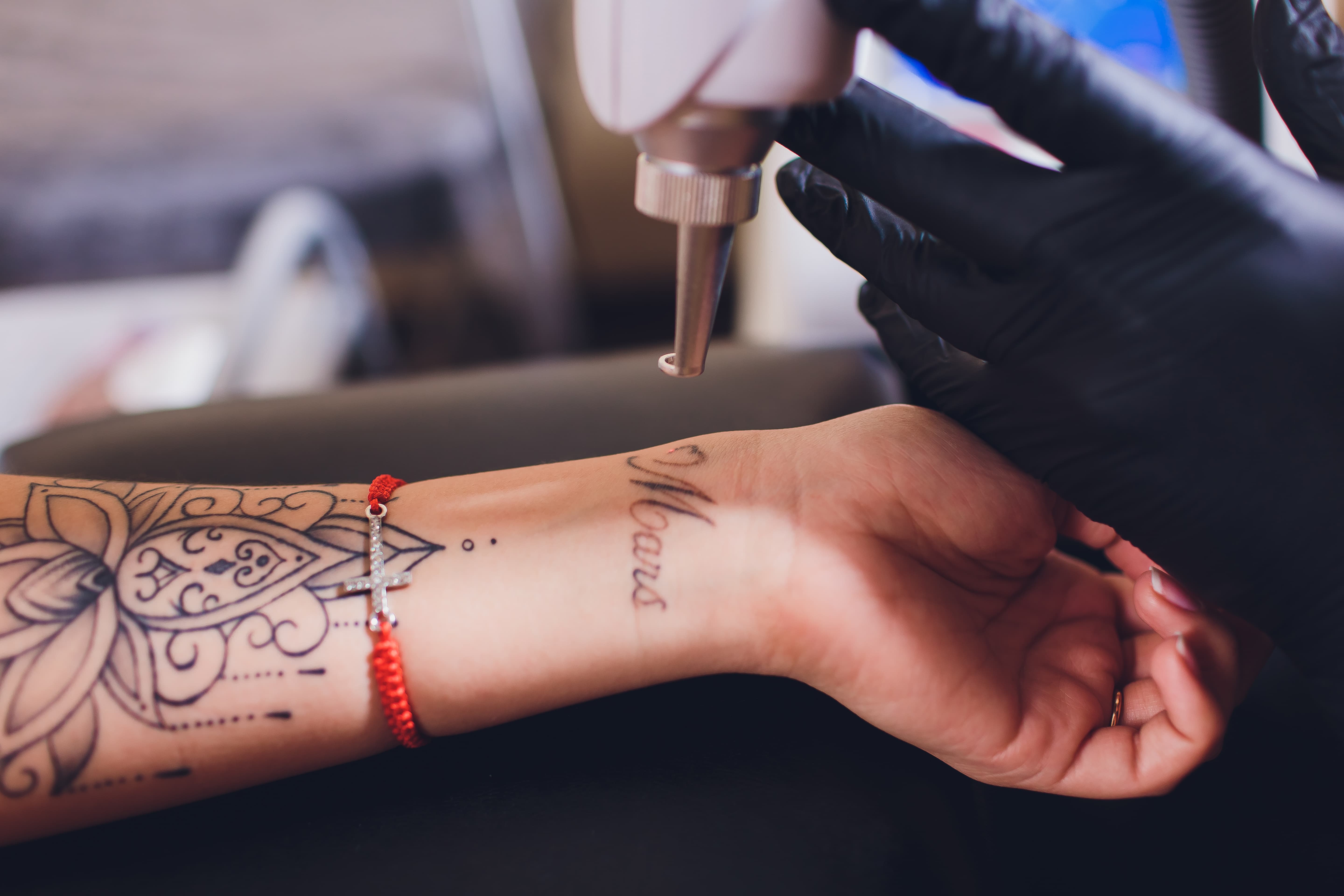
If you are considering tattoo removal, you have probably heard mixed reviews about the process. Older tattoo removal methods were painful, slow, and often left scarring or incomplete results. The Hollywood Spectra laser at Skin with Benefits in Fishers, Indiana represents how far the technology has come. It is one of the most advanced and effective tattoo removal lasers available today, and it works safely across a wide range of skin types and ink colors.
Jamie, our licensed esthetician and certified aesthetic laser technician with eight years of clinical experience, works with the Hollywood Spectra regularly. Here is a clear, honest breakdown of how this technology works and what you can realistically expect throughout the removal process.
The Science of How It Works
The Hollywood Spectra is a Q switched Nd:YAG laser, which means it delivers extremely short bursts of energy in nanoseconds. Those bursts are absorbed specifically by the ink particles sitting in your skin without damaging the surrounding tissue. The energy fractures the ink into tiny fragments that the body's lymphatic system can recognize and gradually carry away. Over time, the tattoo fades as more and more ink is cleared from the area through your own natural processes.
This selective targeting is what makes the Hollywood Spectra so effective and safe. Older lasers used longer, less precise pulses that caused more thermal damage to surrounding skin. The Q switched technology was specifically developed to deliver maximum impact to pigment with minimal impact to everything else, which is why it has become the standard for serious tattoo removal work.
What It Feels Like
Most clients describe the sensation as similar to a rubber band snapping repeatedly against the skin. It is not pleasant, but it is brief and very manageable. Jamie typically applies a topical numbing cream before the session to reduce discomfort, and the treated area is cooled during the appointment. Sessions tend to be short, often only a few minutes for smaller tattoos, which makes the discomfort easier to tolerate. Larger pieces take longer but are still spread across short, focused passes.
The Number of Sessions You Will Need
This is the question every client asks, and the honest answer is that it depends. The number of sessions varies based on the age of the tattoo, the size, the colors used, the density of the ink, and the location on the body. Older tattoos with simple black ink in well circulated areas tend to clear the fastest. Newer tattoos, multi color pieces, and tattoos on areas with less circulation may require more sessions to fully resolve.
On average, most tattoos require somewhere between six and twelve sessions spaced six to eight weeks apart. The spacing matters because the body needs time to clear the broken down ink between treatments. Rushing the process actually slows the overall progress and increases the risk of skin irritation, so Jamie always recommends being patient with the schedule.
What to Expect Between Sessions
After each session, the treated area will look slightly red and may feel similar to a mild sunburn for a day or two. Small blisters can sometimes form, and a light scab may develop. All of this is normal and resolves within about a week. Between sessions, you will watch the tattoo gradually fade as your body continues to clear the broken down ink. Each session builds on the last, so the progress is cumulative and meaningful over the course of the treatment plan.
Why Skin Tone Compatibility Matters
One of the most significant advantages of the Hollywood Spectra is its safety profile across a range of skin tones. Some older lasers carried meaningful risks of pigmentation changes for clients with deeper Fitzpatrick skin types. The Hollywood Spectra was designed to minimize this risk, which makes it one of the more inclusive options available for tattoo removal. Jamie is experienced with adjusting the laser settings for each individual client to keep the treatment safe and effective.
Aftercare That Protects Your Results
Aftercare is straightforward but important. Keep the treated area clean, apply the topical ointment Jamie recommends, and avoid direct sun exposure until the skin has fully healed. Sunscreen is essential going forward, because UV exposure can interfere with the body's clearing process and increase the risk of pigment changes. Following the aftercare instructions closely is one of the most reliable ways to ensure your final result is exactly what you want.
Starting the Process
If you are ready to begin tattoo removal, the first step is a consultation with Jamie at Skin with Benefits in Fishers. She will assess your tattoo, ask about your goals, and give you an honest projection of how many sessions you might need and what your final result could realistically look like. From there, the two of you can map out a treatment plan that fits your timeline and your skin.
Read More Blogs!
Stay updated with the latest blog posts and engage with our community.